Let me make something absolutely clear. I will never tell someone what they should or should not be offended by. I also feel that a larger, more inclusive and welcoming tent is a better tent, and that any changes that make the tent more inclusive are generally good. Got it? Good. I don't want anybody to misunderstand where I'm coming from, though Goddess knows someone probably fucking will.
Have you out there ever been really angry at Conservative right wingers in america? Okay, let me refine the question. Have you ever felt uncomfortable critiziing the policies of the Obama Administration because the other people critizing him are raving fucking lunatics screaming about Muslim Manchirian Candidates and socialist FEMA trailers? Seriously. Its hard to be a left leaning critic of the Obama Adminstration because MOST of his critics are fucking crazy, and you face the real danger of getting lumped in with the crazies.
I feel like that right now. Because I have an opinion on the relevance of the World Fantasy Award trophy, but the REASONS for that opinion have little in common with the kind of rabid culture-war/Sad Puppy/GamerGate confluence that has included grandstanding, bloviating, death threats and other horrible fucking things.
Most of the rhetoric from people opposed to changing the award statue do NOT seem to interested in talking about why a silly statue, based on a silly sketch by Gahan Wilson might be important or relevant to 21st century Fantasy literature. Instead they want to behave like spoiled children who have had toy taken away from them. Fuck you and all you spoiled, entitled fuck-ups who have derailed any meaningful conversation about this. You are the reason we can't have nice things.
And one of those nice things is the ability to have a conversation, to politely disagree, and to be willing to accept the choices made by others, even though you disagree with them.
Your rhetoric, and your threats, and your animosity and resistance to change do nothing to make the Fantasy genre and the community that has grown up around it better, in any aesthetic or moral way. You are all Cthulhu cultists who would rather destroy the world instead of seeing it change. You are the problem.
But there are always people like you. It is in your nature. And the rest of the world will move on, and you will fade into the night, and be remembered poorly, if at all.
The people I don't want to fade away are the people who created the world fantasy award. They helped create something good and lasting and important to the broader literary community. I want the judges from years past, and the adminstrators, and the board members who have shepherded this unweildy mass of craziness from year to year, and decade to deacde to be remembered, and respected for their contributions to to the community.
And I would like their reasons for doing things, and the icons they chose, and the shit that was important to them to be remembered and respected in its proper context.
The first world fantasy convention was held in Providence, Rhode Island, as a tribute to HPL . The people who attended, and helped create the award were inspired by WEIRD fiction as much as it was by High Fantasy. "The Extruded Fantasy Product" craze had not yet come to dominate the publising industry, and the label "fantasy" was still a very big-tent label that encompassed all the "weird fiction"of the 20th century.
Some contemporary commentators don't see the connection between horror, and fantasy fiction, and that is just one more reason why this history should be remembered. I often hear "what does horror have to do with fantasy" and it is a conversation that I would like to see carried out in a respectful, wide ranging way -- contemporary weird fiction and horror fiction writers are a very important part of the Big Tent that I spoke of earlier. I hope in the wake of the currently ugliness, this important history... of the award, of the genre, and the people who created the award is not lost or dismissed.
Over the course of my professional career I have worked with and published the work of many people who were involved in the Fantasy community in the 70s, when this award was created. I invite anybody who has personal recollections of those conventions to contact me, publicly, or privately, and please share this history.
I am not interested in getting into a shit-slinging contest with anybody. I am not interested in attacking this decision, nor the people who made it, nor the people who advocated for it. I'm intersted in the history of the Fantasy genre and the people who helped shape it. I would love to see a host of primarly source materials come to light. Convention reports and Convention histories. Fan histories. Writer's auto-biographies (published and unpublished) and their first hand observations. As anybody who attends world fantasy knows, it is a secrete carnival of folks who LOVE fantasy fiction, filled with circles within circles within circles. The world Fantasy convention that I go to is not the world fantasy convention that other people go to. And that is part of the magic. And this applies to the literature as well. The stuff that moves me may not be the stuff that moves others, but it is all part of a larger tradition.
These are the types of things that I would like everyone to remember. These are the types of conversations I would like people to have. The shit-slinging cultists who just want to destroy everything should be ignored until they fade into the night. But don't let the productive and important conversations about our genre's history go away or be forgotten. Remembering and talking about this tradition honors the history of the genre and the people in it far better than a single face on an awards
trophy.
Friday, November 13, 2015

Monday, January 19, 2015
Course topics: eras and themes
Chronological Examinations of Science Fiction:
Pre-pulp SF, and the early Gernsbeck Years
(Wells, shelly, Jules Verne, ??, Amazing)
Planetary Romance and the later pulp years
Burroughs. Burroughs Burroughs. EARLY FANDOM.
Golden Age of SF
Camble/astounding. House writers and the big 4. Camble ideas as written by various house writers (mirror themed novels). Non-astounding Golden Age material. Compare US to British in this era (very different mix. Also, Orwell, and non "genre" science fiction of era). Serial Structure... or why those golden age novels are structured the way they are. Fix Ups. Transitions from Fantasy markets to Science fiction markets (How Pern and Darkover became science fiction). Fandom.
The New Wave
Early Galaxy deviations from the golden age norm, and other new Wave Anticedents. Feminist SF. New worlds/morchock and Harrison. Changing standards of paperback publishing (more explicity sex allowed) and now that fueled the later half of the new wave period. Again, not differences/similiarites in Britsh/American SF during this period. Fandom.
Cyberpunk
Gibson's first published shorty story, Fact Sheet Five, through the publicaction of Snowcrash, which offically ended the "cyberpunk" era. Cover some antecedents. (brunner?).
Trends in Modern SF (The last 30 years):
New Space Opera, Dystopia, Steampunk, HardSF Renascence, and other big fat reprint anthologies
Thematic and other ways to look at SF
Young Adult and juvenile Adventure Science Fiction:
Tom swift to Heinlien to Suzanne Collins
Feminist Science Fiction Revolutions
The Language of the Night (Le Guin, 1979) and How To Suppress Women's Writing (Russ, 1983).
British Science Fiction Traditions and trends
Orwell, brunner and Ballard, with Whindim and others. Banks. New Space Opera.
Utopian Traditions: advocacy vs observation
Early pre SF utopian Novels, Rand, KSR, etc etc
Dystopian Literature
Brave New World, Orwell, brunner, ballard, Kim Stanly Robinson, Atwood, paolo.
Apocalyptic and post apocalyptic literature
M. P. Sheil, Walter Miller, The Road, Kim Stanley Robinson
Alternate History
Turtledove to Kim Stanley Robinson. Steampunk.
Paradox of Other in Science Fiction literature
Disproportionately homogenous nature of Science fiction literature and fandom, and how this is at odds with its immigrant roots and thematic concerns. Writers of Color, and how minority writing communities view Science Fiction. Passing vs not passing (pseudonym)
How Science Fiction won the War and made itself irrelavant.
larger examination of science fictions influence and presence in other facets of popular culture, and how this impacted the literature of SF.
Science Fiction and Imperialism:
British and American science fiction. Steam Punk and Alternate history. Dystopian reflections on empires in decline.
Dying Earth Traditionns in SF
Hodgson, Jack Vance, Wolfe and beyond...
Pre-pulp SF, and the early Gernsbeck Years
(Wells, shelly, Jules Verne, ??, Amazing)
Planetary Romance and the later pulp years
Burroughs. Burroughs Burroughs. EARLY FANDOM.
Golden Age of SF
Camble/astounding. House writers and the big 4. Camble ideas as written by various house writers (mirror themed novels). Non-astounding Golden Age material. Compare US to British in this era (very different mix. Also, Orwell, and non "genre" science fiction of era). Serial Structure... or why those golden age novels are structured the way they are. Fix Ups. Transitions from Fantasy markets to Science fiction markets (How Pern and Darkover became science fiction). Fandom.
The New Wave
Early Galaxy deviations from the golden age norm, and other new Wave Anticedents. Feminist SF. New worlds/morchock and Harrison. Changing standards of paperback publishing (more explicity sex allowed) and now that fueled the later half of the new wave period. Again, not differences/similiarites in Britsh/American SF during this period. Fandom.
Cyberpunk
Gibson's first published shorty story, Fact Sheet Five, through the publicaction of Snowcrash, which offically ended the "cyberpunk" era. Cover some antecedents. (brunner?).
Trends in Modern SF (The last 30 years):
New Space Opera, Dystopia, Steampunk, HardSF Renascence, and other big fat reprint anthologies
Thematic and other ways to look at SF
Young Adult and juvenile Adventure Science Fiction:
Tom swift to Heinlien to Suzanne Collins
Feminist Science Fiction Revolutions
The Language of the Night (Le Guin, 1979) and How To Suppress Women's Writing (Russ, 1983).
British Science Fiction Traditions and trends
Orwell, brunner and Ballard, with Whindim and others. Banks. New Space Opera.
Utopian Traditions: advocacy vs observation
Early pre SF utopian Novels, Rand, KSR, etc etc
Dystopian Literature
Brave New World, Orwell, brunner, ballard, Kim Stanly Robinson, Atwood, paolo.
Apocalyptic and post apocalyptic literature
M. P. Sheil, Walter Miller, The Road, Kim Stanley Robinson
Alternate History
Turtledove to Kim Stanley Robinson. Steampunk.
Paradox of Other in Science Fiction literature
Disproportionately homogenous nature of Science fiction literature and fandom, and how this is at odds with its immigrant roots and thematic concerns. Writers of Color, and how minority writing communities view Science Fiction. Passing vs not passing (pseudonym)
How Science Fiction won the War and made itself irrelavant.
larger examination of science fictions influence and presence in other facets of popular culture, and how this impacted the literature of SF.
Science Fiction and Imperialism:
British and American science fiction. Steam Punk and Alternate history. Dystopian reflections on empires in decline.
Dying Earth Traditionns in SF
Hodgson, Jack Vance, Wolfe and beyond...
Sunday, January 18, 2015
A Survey of Science Fiction?
Every time someone comes into the bookstore and says they are teaching a class on Science Fiction, I get excited. And just about every time I talk to them, I end up sad and disappointed. Either they have a very narrow and skewed vision of what science fiction is, or they have very little real experience with science fiction literature, and probably know less than their students.
I'm not trying to be catholic or anything... but words have meanings. Even words used to described science fiction. When you say "Speculative fiction is real, and Science fiction is not..." I get concerned. When you say "Hard SF... Like Robert Heinlein" I get REALLY concerned. I know there's plenty of back and forth discussions about terms and labels and meanings... but there are some very real, and useful classification systems that have proven to be valuable in creating a shared language to talk about science fiction, or have at the very least have been beneficial in terms of sparking debate and critical dialog.
So instead of bitching about the dearth of quality Science fiction course work out there, I'll try and do something about it. I am about to embark on a full set of course work and syllabus, modeled after various English lit programs, designed to convey a complete view of Science Fiction Literature..... A Science Fiction Certification program, if you will. Get this certificate and you should be able to confidently, and competently teach an Science Fiction class. Or at least argue about it online in a really well informed manner.
The beginnings of any English degree is usually the dreaded "Survey" Course:
British Lit 1600-1800, followed by British lit 1800 - 1920. Followed by Modern British Literature. I'm sure all you English majors remember the bane of the Norton Anthologies, and the undergraduate reading lists... Survey courses are usually not terribly exciting stuff...
Except... Most people don't have a sense of science fiction as a literature. They have a sense of the pop culture and movie bits... but science fiction lit is mostly invisible...
First first stop is to gather together all of the "Written as text books" anthologies, and examine how and why they were organized. I'm leery of a straight chronological overview... its all well and good to start out with H. G. Wells and Jules Verne... but I don't think they are the best place to START talking about science fiction... The history and prehistory might be a good upper division specialty course, but I don't think it should be the first thing a modern reader with no genre experience should be presented with. Science fiction is a populist literature about the present. It should be fun. Not dusty and dry and unrelated to the contemporary reader's life.
I remember when The Norton Anthology of Science Fiction first came out there was a huge outcry from SF grognards. "Where was Heinlein" and "This is focused to much on contemporary writers" where the two big complaints I remember. Looking back, these two things seem to be one of the books strong points, and not weaknesses. (sorry Bob... its true... Your work doesn't age very well. I'd slot Heinlein into two different SF courses: "Golden Age" and "Juvenile and YA SF")
Anyway... That's where I want to start... Anthologies that serve as a Survey of Science Fiction Literature:
Who else has attempted to create a "survey course" framework for Science Fiction, via Anthology? I'd love to hear about any others out there... either contemporary, or older ones.... Getting a sense of the different frameworks to present the genre is what I'm looking for. Barring an actual anthology, I'd love to see course syllabi and reading lists from teachers who have attempted this on their own.
Please pass this query around, and make any recommendations in the comments or send me an email, if you prefer. Right now I'm focused on presenting SCIENCE FICTION... but I'll consider ancillary course work in Fantasy and horror fiction down the line. :)
I'm not trying to be catholic or anything... but words have meanings. Even words used to described science fiction. When you say "Speculative fiction is real, and Science fiction is not..." I get concerned. When you say "Hard SF... Like Robert Heinlein" I get REALLY concerned. I know there's plenty of back and forth discussions about terms and labels and meanings... but there are some very real, and useful classification systems that have proven to be valuable in creating a shared language to talk about science fiction, or have at the very least have been beneficial in terms of sparking debate and critical dialog.
So instead of bitching about the dearth of quality Science fiction course work out there, I'll try and do something about it. I am about to embark on a full set of course work and syllabus, modeled after various English lit programs, designed to convey a complete view of Science Fiction Literature..... A Science Fiction Certification program, if you will. Get this certificate and you should be able to confidently, and competently teach an Science Fiction class. Or at least argue about it online in a really well informed manner.
The beginnings of any English degree is usually the dreaded "Survey" Course:
British Lit 1600-1800, followed by British lit 1800 - 1920. Followed by Modern British Literature. I'm sure all you English majors remember the bane of the Norton Anthologies, and the undergraduate reading lists... Survey courses are usually not terribly exciting stuff...
Except... Most people don't have a sense of science fiction as a literature. They have a sense of the pop culture and movie bits... but science fiction lit is mostly invisible...
First first stop is to gather together all of the "Written as text books" anthologies, and examine how and why they were organized. I'm leery of a straight chronological overview... its all well and good to start out with H. G. Wells and Jules Verne... but I don't think they are the best place to START talking about science fiction... The history and prehistory might be a good upper division specialty course, but I don't think it should be the first thing a modern reader with no genre experience should be presented with. Science fiction is a populist literature about the present. It should be fun. Not dusty and dry and unrelated to the contemporary reader's life.
I remember when The Norton Anthology of Science Fiction first came out there was a huge outcry from SF grognards. "Where was Heinlein" and "This is focused to much on contemporary writers" where the two big complaints I remember. Looking back, these two things seem to be one of the books strong points, and not weaknesses. (sorry Bob... its true... Your work doesn't age very well. I'd slot Heinlein into two different SF courses: "Golden Age" and "Juvenile and YA SF")
Anyway... That's where I want to start... Anthologies that serve as a Survey of Science Fiction Literature:
- There was The Norton Anthology of Science Fiction edited by Ursula K. Leguin.
- There was Age of Wonders edited by David G. Hartwell
- and There's the Weislian Anthology of Science Fiction edited by Arthur Evans and Istvan Csicsery-Ronay
Who else has attempted to create a "survey course" framework for Science Fiction, via Anthology? I'd love to hear about any others out there... either contemporary, or older ones.... Getting a sense of the different frameworks to present the genre is what I'm looking for. Barring an actual anthology, I'd love to see course syllabi and reading lists from teachers who have attempted this on their own.
Please pass this query around, and make any recommendations in the comments or send me an email, if you prefer. Right now I'm focused on presenting SCIENCE FICTION... but I'll consider ancillary course work in Fantasy and horror fiction down the line. :)
Tuesday, June 24, 2014
Jay Lake, The City Imperishable, and Me.
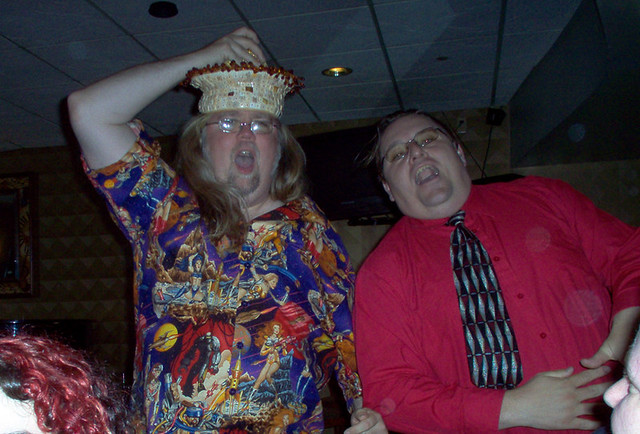 So this was hard to write. I've been putting it off for a while. A lot of people have written a lot of stirring obituaries and remembrances of Jay Lake. That's not really what this is though. This is more about me. And it seemed pretty crass to write about myself in immediate wake of someone else's personal tragedy. So I waited, and I thought a lot about stuff. And then I ran into this picture online, and felt that I had to write something. Amanda Downum took this picture at Wiscon 30. Thank you Amanda. You photo helped get off my ass and down to the business of writing and remembering.
Jay lake started out as a colleague, and writer who I was hearing a lot about. And then a distant but regular convention friend. And then he became an author that I published. And then he became a disappointed and frustrated author that I published. It was the first time that I had really failed as a publisher. Sure, I had books that had done worse, but there were lower expectations for those books. This was a book by Jay Lake... the shiny, up-and-coming-super-star short-story-writer that everyone was talking about. This was supposed to be his amazing commercial debut. He was going to be the next China Mieville. And it didn't happen. And this was the first time I could point to a specific mistake I made that directly impacted the sales in a negative way.
One of the reasons Jay went with Night Shade was because we always put out really good looking books. But Trial of Flowers had a disaster of a cover, and it was my fault. We were ramping up our schedule and trying to more books sooner, but our proccess hadn't changed, and we were still producing them the same way we had always done them. There were time pressures and new artists to work with, and I was in charge of it all. And I failed him. It was a simply adequate piece of art with a mediocre to solid cover design, but what really sunk it was somewhere in the communication between the Artist, the Cover Designer and Me, the color profile of the artwork's tiff file got changed to something that wasn't CMYK, and it got sent to the printer. And when it came back, the color had shifted and looked terrible. And we didn't catch it until we had 5K copies in the distributors warehouse.


 Jay never out-right confronted me about it, but I knew he wondered why his book looked so bad, while most of the other Night Shade titles looked substantially better. And I tried to make it up to him by publishing a sequel to the book... with the hopes that I could turn the sales of the two books around some how. And Madness of Flowers got a pretty good looking cover that I was proud of. But I never got the series to take off. And due to some miscommunications between me and my business partner (and conversatiosn between my businesses partner and a third party) Jay had an even worse experience with Night Shade the second time around.
I had asked to see an early draft of Madness of Flowers, because I wanted to give Jay a hands on edit. I loved Trial, and was eager to try and make Madness the best it could be. My partner Jason didn't know this was an early draft, and was complaining to someone about the bloated manuscript Jay had turned in. I think the word Unprofessional was used. This got back to Jay who was understandably pissed off about the characterization. If there was one thing Jay was, it was utterly professional. I had some tense words with my partner, and I contacted Jay and apologized profusely, but the damage was already done.
We were never close after this incident, and I failed to find a bigger audience for the two City Imperishable novels. Jay moved up to a bigger publisher, and over the years he was cordial and professional towards me, but I never felt like I could make it up to him. I let him down. He was the first author who I felt I had failed... utterly failed.
For me, Trail of Flowers was the next Perdido Street Station. It was a smart, funny, baroque to the point of grotesque epic novel, filled to the brim with ideas, all executed flawlessly. The characters were a diverse cast of hilarious over and under achievers. I loved that book, AND its sequel. There are passages from it that still haunt me. There could only be ONE reason why that book didn't take off and become a huge hit, and that was because of THE COVER, WHICH I HAD SCREWED UP... Except....
I remember having conversations with a reader at Borderlands. He didn't know of my connection to the book. We were just two fans talking about fantasy novels. And he said, "yeah... I kind of liked it, but it was just TOO MUCH... to dark and graphic."
"Really?" I asked. "How so?"
"Well, the book starts off with a dwarf masturbating to all tall person getting murdered and tortured for his gratification. Later that dwarf is anally raped in graphic detail, and the author spends a lot of time describing the injuries and sutures the dwarf needs in his ass. Then there's the main character.. the one raised and abused by the dwarf? He gets off by torturing people in his S&M Dungeon beneath his office...."
"I guess, when you list all those things back to back like that..." I said, trailing off. Trail of Flowers was a dark book. It was filled with all kinds of nastiness. But I felt it was filled with a lot of other stuff too, and the Nastiness sort of mirrored the world I was living in...
US run Torture camps in Iraq were on the news every night... So all the nastiness in the book seemed kind of minor compared to the atrocities that were happening every day.

 In retrospect, I have to think that the horrors that were going on in the world around Jay as he was writing them had a direct impact on The City Imperishable books. The the setting for those two books was the last remaining shell of a former imperial empire... the city was and its inhabitants were living in a past where they were the center of the world, while the rest of the world had moved on. It was the crumbling remanent of a failed empire, filled by myopic and self important citizens who didn't realize their time had passed. It's possible these books were attempts to make sense of the America that Jay was living in. I don't think they were ever evaluated in that context, and I didn't promote them or push them in that way either. When you are in the middle of something, It's sometimes easy to miss the obvious.
And as the publisher, I didn't see the obvious... the obvious fact that while I loved the books, they were a bit far from the fantasy mainstream. Sure, the benchmarks were being moved to the dark and grim side of things... And since them, "Grim Dark fantasy" has become the new black. But there are STILL a lot of readers for whom China Mieville is just too gross and icky. The City Imperishable books are a bit further down the icky spectrum. They were too in your face, and gross and dark for a lot of fantasy readers at the time they were published. And that right there is another perfectly legitimate reason why the books didn't find a wider audience. But the cover... man. That was on me. I'm sorry Jay.
I ran into Jay at San Diego Comicon last year. I had heard he was going to be there. We exchanged pleasantries, and I idiotically said "I'll see you later" when we parted, even though I knew I wouldn't. When Jay first came down with cancer, it terrified me, because Jay was my age. And he had a beautiful young daughter who needed him. He was a living breathing example of just how cruel and uncaring the universe is. Every time Jay won another battle, and pushed off cancer for another week, or month or year, I cheered for him. I quietly kept up with his battles via the internet. He generously shared his experiences with the world, and I was one of those folks who watched from afar. I sent him a letter once... a long detailed letter that was filled with my fears of my own mortality. I told him what an inspiration he was. But it was a letter about my own insecurities, so I'm not surprised I didn't hear back from him.
When my own daughter was born, I thought of Jay's daughter... who I had met once at a Night Shade launch party for Doug Lain's collection. She seemed like such an incredible little girl. Smart, articulate, filled with confidence and wonder. Even during that short time that I met, I could tell that one of the best things Jay helped create was his daughter. And she was always at the center of Jay's life. Once again, Jay was an inspiration... in this case, he showed me what happens when you work hard at being the best father you can be.
Speaking of inspirations... There is an embedded little Easter egg... an anecdote about The City Imperishable books. Jay never admitted it, but I'm pretty sure the character "Jason The Factor" was based in part on my business partner Jason. The Jason in the book was an accountant and money changer and lender... Jason real life handled all the accounting and sent out all the checks for Night Shade. Jason in the book had a kinky S&M torture dungeon below his office,. Jason in real life... well... maybe its too much information... but yeah. Jason liked it rough and kinky, and he had been known to over share now and again, so I'm pretty sure Jay new about this side of Jason. Was the name "Jason" just a coincidence? Maybe. But I think Jay was a funny, savvy irreverent writer who packed a lot of different things into his prose.
Jay was one of the first friends I lost because I was his publisher. He wouldn't be the last. And my experience with Trail... and the reception it received from some readers and reviewers... That was an important lesson... about being honest with one's self, editorially. Aesthetic blinders can cause you to misread the marketplace, and make sales predictions and promises that you just can meet. But that experience with the cover.... That was the one that really haunted me. For a while it didn't help... it caused me to freeze up, put things off and ignore obvious problems. Being the one guy, ultimately in charge of and responsible for everything... It was pretty overwhelming at times. Its one of the reasons Night Shade started hiring staff, and paying people to be responsible for stuff. Which led to new sets of problems and stresses.
But there were many instances... where, at the last minute, I shit -canned art that just wasn't right, and found something else... or I didn't settle on a mediocre design... or I just kept working it over and over until the right combination of artist, and concept and design appeared. I didn't want to be the guy who destroyed someone's career with a bad cover... Because I had felt I had already done that once, and once was enough.
Thursday, June 19, 2014
The Drop by Dennis Lehain
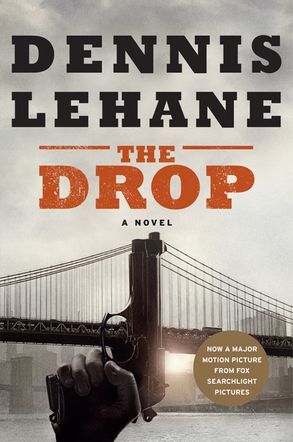
Ultimately, the books bastard parentage doesn't really matter. Its a gripping, focused little narrative that packs a lot of punch. There is an efficancy of prose and plotting, with lots of embedded hints and foreshadowings. The characters are drawn well, and often in sharp contrast to one another. Even a couple of throw away thugs have nicely detailed physical and psychological characteristics (The brothers "10").
Like a lot of successfull crime writing, the drop is about broken people living their lives as best they can. Some are trying to make their lives better... and sometimes these journeys of redemption are kicked off by random happenstance.
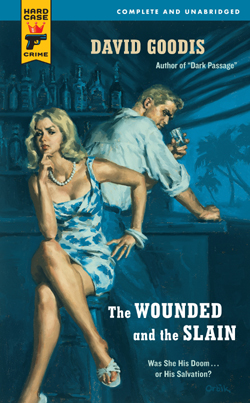 Making hard choices, and Making choices you have to live with, but sometimes can't. This seems to be the thematic Core of The Drop. Lehain's gripping, yet starkly drawn character sketches fill out a modest plot that is less concerned with who done it and more concerned with putting humpty back together again. So yes... that does make it the perfect little crime novel... a novel that would not seem out of place on the dime store racks, next early 20th century crime noir masters like Cornell Woolrich and David Goodis.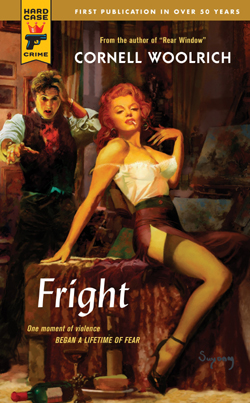
My only complaint is that this book will have a movie tie in cover, instead of some retro-pulpy-noir piece of awesome, the way Hardcase Crime does... Maybe the limited edition hard cover will feature some throwback artwork? Hopefully? One can dream...
A Goat In White Van
I first discovered the work of John Darnielle via his band, The Mountain Goats; Specifically, their album Heretic Pride. That album combined a mix of literary and pulpy pop-cultural influences that immediately spoke to me, and suggested that John Darnielle and I were, if not kindred sprits, then at least drinking deeply from the same cultural wells. I spent the month after hearing this album trying to tell everyone I knew about this "new" band I had discovered, only to learn that 1) everyone had already heard of them, 2) their two upcoming shows in San Francisco were already sold out*, and 3) John Darnielle was so damn cool that he was in a video by one of my favorite hip hop artists... Damn, even Aesop Rock had already heard of John Darnielle and the Mountain Goats..
So when i discovered that John Darnielle had a novel coming out, I moved heaven and earth to get an advanced copy. Actually, I just asked the manager at the bookstore I work at to ask for a copy from the publishers sales rep, but that doesn't properly convey the level of anticipation, or frantic desire on my part, so lets just stick with "moved heaven and earth." I was finally going to be out in front of the John Darnielle cultural curve. Finally!
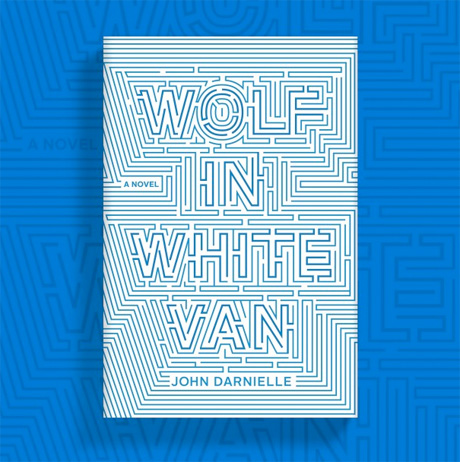
The galley of Wolf in White Van has one of those designed covers that is positively blinding. I get what they are trying to do... but I don't think it does the book any favors. It's clever in a way that established best sellers can have clever covers, but IMO, this is not the cover you want on a debut novel. I hope I'm wrong in this regard, because this novel is brilliant, and deserves to find a very large group of readers.
The novel is a slow, stately reveal of a character, Sean Phillips who has suffered a horrible disfigurement. As we move forward through the narrative, Darnielle reveals more and more of how and why the chacrater ended up the way he is. There is a complex flesh back structure combined with a meta-narrative of sorts that is related to a mysterious game called Trace Italian. This game, and various bits of the characters past emphasize yet again that Darnielle and I have been drinking the same cultural kool-aid for a some time.
The character, and settings spoke to me as painfully real, in ways that remind of of Junot Diaz's The Brief Wondrous Life of Oscar Wao. I recognized the painfully awkward and lonely protagonists of Wolf in White Van, and the interior worlds they inhabit. I recognized the flat surfaces of the external wold they try to live in, and the tentative joy when those exterior worlds sometimes take on three dimensions.
There is nothing overwrought or purple about Darnielle's style, and nothing twee about his plots and characters. There is a simple intensity, and a playful reveal of details that engenders the feelings of a burgeoning romance and courtship. We the reader are slowly finding out more about Sean Phillips and the world he inhabits... and like many romances, there are no guarantees we are going to like Phillips when we finally learn all of his secrets, but the journey is memorable and exciting.
I was very impressed by the narrative's continuous parade of MacGuffins and solutions to the core mystery of the novel. There was an intensity to the novel's slow reveal that belied the skeletal plot. And the meta story telling embedded in the Trace Italian game expertly interwove and suggested relationships between character motivation and author intentionality, and served as a possible Rosetta Stone to some of the novels questions. The culmination and final reveal of the novel exploded with an emotional inensity equal to that of some of Darnielle's best songs.
This is a character driven novel, with a minimal plot. And as I suggested, the tension in the novel isn't about what is going to happen, but a slow reveal of what has happened, and why. Frankly this is a tough type of narrative to pull off, but I think Darnielle manages it expertly. Given that the frisson of this work involves organically discovering the mysteries embedded in the character's life, I would urge readers to dive right in, and avoid reading summaries and plot descriptions. Its an amazing novel, and I hope Darnielle continues to prose writing. His earlier effort in meta-textual prose/rock criticisms, Master of Reality is on my to read pile, and I'm really looking forward to it.
Wolf in White Van comes out in hardcover in September of this year.

*Six months later, the Mountain Goats returned to San Francisco and played the Filmore. I got tickets the day they went on sale. The funny thing about this concert was that they played almost exclusively from Heretic Pride. The audience kept calling out for songs from their extensive back catalog, and the Mountain Goats kept playing tracks from the new album... it felt like the show was just for me, because I didn't know any of the older material... but I knew every track on the new album by heart.
So when i discovered that John Darnielle had a novel coming out, I moved heaven and earth to get an advanced copy. Actually, I just asked the manager at the bookstore I work at to ask for a copy from the publishers sales rep, but that doesn't properly convey the level of anticipation, or frantic desire on my part, so lets just stick with "moved heaven and earth." I was finally going to be out in front of the John Darnielle cultural curve. Finally!
The galley of Wolf in White Van has one of those designed covers that is positively blinding. I get what they are trying to do... but I don't think it does the book any favors. It's clever in a way that established best sellers can have clever covers, but IMO, this is not the cover you want on a debut novel. I hope I'm wrong in this regard, because this novel is brilliant, and deserves to find a very large group of readers.
The novel is a slow, stately reveal of a character, Sean Phillips who has suffered a horrible disfigurement. As we move forward through the narrative, Darnielle reveals more and more of how and why the chacrater ended up the way he is. There is a complex flesh back structure combined with a meta-narrative of sorts that is related to a mysterious game called Trace Italian. This game, and various bits of the characters past emphasize yet again that Darnielle and I have been drinking the same cultural kool-aid for a some time.
The character, and settings spoke to me as painfully real, in ways that remind of of Junot Diaz's The Brief Wondrous Life of Oscar Wao. I recognized the painfully awkward and lonely protagonists of Wolf in White Van, and the interior worlds they inhabit. I recognized the flat surfaces of the external wold they try to live in, and the tentative joy when those exterior worlds sometimes take on three dimensions.
There is nothing overwrought or purple about Darnielle's style, and nothing twee about his plots and characters. There is a simple intensity, and a playful reveal of details that engenders the feelings of a burgeoning romance and courtship. We the reader are slowly finding out more about Sean Phillips and the world he inhabits... and like many romances, there are no guarantees we are going to like Phillips when we finally learn all of his secrets, but the journey is memorable and exciting.
I was very impressed by the narrative's continuous parade of MacGuffins and solutions to the core mystery of the novel. There was an intensity to the novel's slow reveal that belied the skeletal plot. And the meta story telling embedded in the Trace Italian game expertly interwove and suggested relationships between character motivation and author intentionality, and served as a possible Rosetta Stone to some of the novels questions. The culmination and final reveal of the novel exploded with an emotional inensity equal to that of some of Darnielle's best songs.
This is a character driven novel, with a minimal plot. And as I suggested, the tension in the novel isn't about what is going to happen, but a slow reveal of what has happened, and why. Frankly this is a tough type of narrative to pull off, but I think Darnielle manages it expertly. Given that the frisson of this work involves organically discovering the mysteries embedded in the character's life, I would urge readers to dive right in, and avoid reading summaries and plot descriptions. Its an amazing novel, and I hope Darnielle continues to prose writing. His earlier effort in meta-textual prose/rock criticisms, Master of Reality is on my to read pile, and I'm really looking forward to it.
Wolf in White Van comes out in hardcover in September of this year.
*Six months later, the Mountain Goats returned to San Francisco and played the Filmore. I got tickets the day they went on sale. The funny thing about this concert was that they played almost exclusively from Heretic Pride. The audience kept calling out for songs from their extensive back catalog, and the Mountain Goats kept playing tracks from the new album... it felt like the show was just for me, because I didn't know any of the older material... but I knew every track on the new album by heart.
Sunday, April 6, 2014
Raging Against the Cages of Our Own Unhappiness
I decided I need to start writing these things again, because it seems like I've only been writing when someone dies. And that's a piss poor reason to write something down. It's all regrets.
As one ages, it seems like life is full of them. Small ones. Big ones. Some regrets are like a piece of corn stuck between your teeth... annoying, and recognizable, but something you can live with. Other regrets haunt you like a demon-ghost from a Joe Hill novel. It's the curse of aging -- though I suppose there are some people who aren't introspective enough to have regrets of the sort I'm talking about. Either way... whether it be from a long life, or from introspection, regrets are a queer sort of badge of honor. If you don't have them, you either haven't had much of a life, are a thoughtless idiot, or are dead.
But what got me putting fingers to keyboard today was an afterword to a novel. Joe Hill's Heart Shaped Box is a novel filled with Rock-N-Roll. And in the afterword of the deluxe limited edition published by Subteranian press, he talks a little bit about his rock-filled youth. And he says something that resonated with me; "...for a whole subculture of lonely, angry, imaginative kids, loud music is the hammer they use to bash at the cage of their own unhappiness"
I remember listening to a LOT of loud music... much of the music described in this afterword of Heart Shaped box is music I listened to as a teen. I had a very loud stereo system that I had lovingly cobled together from purchases made with saved birthday and Christmas monies. I had a few hundred slabs of vinyl to go along with several more hundred CDs, because I'm that damn old, and because middleschoolers should not be allowed to join the Columbia House Record of the Month Club (I think I'm still paying off that bill). I remmeber most of the album covers. And while I don't remember the songs consciously, if one comes on randomly in the background, I will find myself singing along to the words, which have been hidden away in my brain for over 30 years, randomly escaping when a song comes begins playing.
Memory is a weird thing. I don't remember what I was angry or unhappy about. I mean, there are the general things like "nobody likes me" or "I'll never get laid"... But I had a small group of friends that I got along with. And weirdly enough, I sort of kind of managed to get laid in the summer between my junior and senior year of highschool after meeting someone at a George Thorogood concert, while spending the summer in Minnesota with my natural father. So clearly my life wasn't Terrible.
But man. I was angry, frustrated and alienated pretty much all the time. hormones and whatnot... the usual cliches can be pointed at. I remember thinking a lot about suicide in the 6th grade... Mainly I remember because something I wrote in a school journal got back to my mother, and she had a pretty serious and heavy intervention in her young sons life. So it never really got much beyond the idle "scribblings in a notebook" phase of suicidal thoughts.
I remember describing myself as Melancholy... eventually I found a great self-involved first-love tragedy in college to get really weepy about, so that helped. I think maybe my personality and/or view of the universe demanded that my first love be a tragic one. It was pretty clear in retrospect that we weren't very compatible. But I manged to drag that train-wreck of a relationship out for almost 3 years, and flunk out of college in the process. Sorry about that, A. I'm sure you weren't a terrible person. I Hope your life went well. Etc etc.
I remember a line in a Nick Cave monolog, where he described his early life in the punk band The Birthday Party. He said something to the effect that it was a lot of work, being angry all the time. This is very true. And the anger, frustration, and (in my case rage) of adolsence is an all-consuming rage that is simmering in the back of your consciousness all the time, infecting everything.
Maybe the trick of growing up is to somehow forget about it. To ignore it, at least for a ittle while. The slights, the dissapointments. The frustrations. The self loathing, and the loathing of others... if you can just, for small periods of time, forget that stuff - maybe thats what it means to be an adult?
I had an extended period of re-adolesence. Post 911 america reawaked my inner rage-demon, and I found myself crying and screaming and getting angry pretty much all the time. I probably came closs to having a stroke, as at one point my blood pressure was 140 over 220. They took my blood pressure in my other arm, because they thought maybe a clot was causing the blood pressure in one arm to be abnormally high. That kind of blood pressure is a symptom of some serious rage.
Speaking of Rage... that novel by Richard Bachman (AKA Stephen King, AKA Joe Hills father) was one that I read in middle school. It's an interesting perspective, being young, and looking up at characters who are older than you*. I remember being fascinated/terrifed by the novels depiction of highschool life, and at the same time I was weirdly comforted by the confirmation of my basic expectations of life, and school -- that highschool would be just as shitty and awfull as middle school and grade school had been for me,
The protagonist being institutionalized at the end always had a strange kind of appeal... If you just flip out and do something horrible, then you no longer have to worry about anything/everything. I do clearly remember thinking, even before reading Rage, that maybe, just maybe, being hospitalized or imprisoned wouldn't be all that bad because all the social pressures that seemed to be rearing up and intimidating me would be removed. A simpler life. Rage (the novel) was an articulation of that particular preadolescent fantasy... Of course I clearly didn't understand that institutional life is just more of the same kinds of social pressures, just in a pressure cooker, and deformed to something even uglier than your average middle school/highschool terror dome.
The movie Fightclub seemed to have been a movie created just for me. If you don't get why the movie worked, or what its appeal was, than you never experienced the rage and helplessness that many, many people have. It was the cinematic equivalent of Loud Rock Music. Of course, Fight Club was like Milton's Paradise lost... It reveled in the exploits of the devil, and got the reader all fired up by identifying closely and clearly with the anti-hero protagonist, but the narrative was wrapped up in a neat little bow that said "But that's crazy, of course, and you shouldn't do that." It's the narrative technique that wraps up all socially acceptable anti-hero pornography.
A person's reactions to Fight Club, and to the Columbine shootings are a perfect Rorschach test. I totally understood the impulses behind the murderous actions of those lost, angry teenagers. I and a lot of my post-college friends kind of shrugged and said "yeah... I'm surprised shit like that doesn't happen more often." And then, tragically, it did start happening more often. I was always surprised to find there were people who just didn't understand what compels angry young teenagers to do what they do. Clearly those people did not grow up listening to Suicidal Tendencies "Institutionalized."
From 2001 until 2011, I was pretty clear about what was making me angry all the time; The atrocities being commmited in my name by my country's millitary. Or at least I thought thats what it was. Tellingly, I spent most of that time not speaking to my natural father. His alcoholism pushed buttons in a way that finally compelled me to just cut him out of my life, so i had a host of unresolved shit, swirling around, and an excuse to act out in anger. I mean fuck... if you weren't angry during the Bush regime, you weren't paying attention.
That's a paraphrase of something I heard in a documentary about The Weather Underground; Do I understand why people strap on suicide vests, or blow up buildings. Yeah. Moral indignation and outrage are excellent things to wrap one's rage and unhappiness in. I used to joke that if it wasn't for internet flame wars and the release that my heated online rhetoric gave me, I would be up in a tower with a sniper rifle, because HOLY SHIT LOOK AT THE WORLD AROUND YOU, WHY AREN'T YOU FURIOUS??!!! And while true to a certain extent, when I said shit like that.... I was totally channeling my inner 13 year old. I was channeling that young me, who didn't know how to ignore the constant white noise of pain, and anger and rage and unhappiness that is a part of our human condition.
I don't know if one state is inherently better than the other... being able to shut off the noise? It certainly seems necessary if you are trying to raise two small children. I don't want them to be filled with rage. I want them to be happy. I don't want them to be ignorant of the world around them, and I hope they grow up and try and make the world a better place. But if all they are is happy, I won't complain. Because being a slave to your rage isn't any way to live. I struggle with the small stuff every day.
I get irrationality and disproportionately angry all the time. And when I do so I make the people around me unhappy and uncomfortable. I count backwards a lot. sometimes from 10. Sometimes from 100. Sometimes my mind races along and is wrapped up and turning in circles. I replay conversation, and hash out imaginary conversations with people, trying to justify my rage or anger or overwheling sadness and helpnessness... trying to convince myself that these racing hormones and flowing endorphins are real and justified and I'm NOT FUCKING CRAZY, JUST ANGRY LIKE ANY RATIONAL PERSON WOULD BE. And when I'm in that state, I count backwards a lot to try and shut down my mind, and try to get it out of the groove that it is stuck in.
I think that loud angry music of my youth was the counting backwards of my middleagedness. I'm reminded of a quote that resonated with me in my angry youth. "It's better to Reign in Hell than to serve in Heaven." You know, that classic quote from mythologies greatest rebel, Lucifer The Morning Star. In writing this, I feel a little bit like that character from pulp fiction, who has been quoting that Ezekiel verse his whole life, but when he tries to make a significant lifestyle change, he find himself reevaluating the meaning of the quote.
If Heaven is happiness and a perfect world, perhaps the price of achieving that perfect happiness is too great. Maybe I can let go of my anger and rage, and just be content ruling over hell -- an imperfect place with problems and ugliness and frustrations -- but a place where I am not a slave to my rage. In order to achieve heavenly perfection, I have to be a slave to my emotions, and never be satisfied with what I actually have. I'm reminded of another quote that has also resonated with me. "'Perfect' is the Mortal enemy of good enough."
Perhaps this seems a bit like settling for less, or for justifying failure, but snarky critiques like that seem very adolescent. Is almost-heaven good enough? Every individual has to decide for themselves.
Yours in introspective rage,
Jeremy
*For example. Did you ever watch the Movie Bull Duhram? The Costner character seemed SO COOL when I saw the movie as a teenager... world weary, yet wise, and wry and funny. When I watched the movie for the first time in 30 years, my reaction to the character was very different: He seemed to be an angry, jealous frustrated jerk who spouted platitudes while pretending to be the Buddha. Maybe that's the genius of that movie, and other narratives like it. The character can be both things to the same reader/viewer, at different times of ones life.
As one ages, it seems like life is full of them. Small ones. Big ones. Some regrets are like a piece of corn stuck between your teeth... annoying, and recognizable, but something you can live with. Other regrets haunt you like a demon-ghost from a Joe Hill novel. It's the curse of aging -- though I suppose there are some people who aren't introspective enough to have regrets of the sort I'm talking about. Either way... whether it be from a long life, or from introspection, regrets are a queer sort of badge of honor. If you don't have them, you either haven't had much of a life, are a thoughtless idiot, or are dead.
But what got me putting fingers to keyboard today was an afterword to a novel. Joe Hill's Heart Shaped Box is a novel filled with Rock-N-Roll. And in the afterword of the deluxe limited edition published by Subteranian press, he talks a little bit about his rock-filled youth. And he says something that resonated with me; "...for a whole subculture of lonely, angry, imaginative kids, loud music is the hammer they use to bash at the cage of their own unhappiness"
I remember listening to a LOT of loud music... much of the music described in this afterword of Heart Shaped box is music I listened to as a teen. I had a very loud stereo system that I had lovingly cobled together from purchases made with saved birthday and Christmas monies. I had a few hundred slabs of vinyl to go along with several more hundred CDs, because I'm that damn old, and because middleschoolers should not be allowed to join the Columbia House Record of the Month Club (I think I'm still paying off that bill). I remmeber most of the album covers. And while I don't remember the songs consciously, if one comes on randomly in the background, I will find myself singing along to the words, which have been hidden away in my brain for over 30 years, randomly escaping when a song comes begins playing.
Memory is a weird thing. I don't remember what I was angry or unhappy about. I mean, there are the general things like "nobody likes me" or "I'll never get laid"... But I had a small group of friends that I got along with. And weirdly enough, I sort of kind of managed to get laid in the summer between my junior and senior year of highschool after meeting someone at a George Thorogood concert, while spending the summer in Minnesota with my natural father. So clearly my life wasn't Terrible.
But man. I was angry, frustrated and alienated pretty much all the time. hormones and whatnot... the usual cliches can be pointed at. I remember thinking a lot about suicide in the 6th grade... Mainly I remember because something I wrote in a school journal got back to my mother, and she had a pretty serious and heavy intervention in her young sons life. So it never really got much beyond the idle "scribblings in a notebook" phase of suicidal thoughts.
I remember describing myself as Melancholy... eventually I found a great self-involved first-love tragedy in college to get really weepy about, so that helped. I think maybe my personality and/or view of the universe demanded that my first love be a tragic one. It was pretty clear in retrospect that we weren't very compatible. But I manged to drag that train-wreck of a relationship out for almost 3 years, and flunk out of college in the process. Sorry about that, A. I'm sure you weren't a terrible person. I Hope your life went well. Etc etc.
I remember a line in a Nick Cave monolog, where he described his early life in the punk band The Birthday Party. He said something to the effect that it was a lot of work, being angry all the time. This is very true. And the anger, frustration, and (in my case rage) of adolsence is an all-consuming rage that is simmering in the back of your consciousness all the time, infecting everything.
Maybe the trick of growing up is to somehow forget about it. To ignore it, at least for a ittle while. The slights, the dissapointments. The frustrations. The self loathing, and the loathing of others... if you can just, for small periods of time, forget that stuff - maybe thats what it means to be an adult?
I had an extended period of re-adolesence. Post 911 america reawaked my inner rage-demon, and I found myself crying and screaming and getting angry pretty much all the time. I probably came closs to having a stroke, as at one point my blood pressure was 140 over 220. They took my blood pressure in my other arm, because they thought maybe a clot was causing the blood pressure in one arm to be abnormally high. That kind of blood pressure is a symptom of some serious rage.
Speaking of Rage... that novel by Richard Bachman (AKA Stephen King, AKA Joe Hills father) was one that I read in middle school. It's an interesting perspective, being young, and looking up at characters who are older than you*. I remember being fascinated/terrifed by the novels depiction of highschool life, and at the same time I was weirdly comforted by the confirmation of my basic expectations of life, and school -- that highschool would be just as shitty and awfull as middle school and grade school had been for me,
The protagonist being institutionalized at the end always had a strange kind of appeal... If you just flip out and do something horrible, then you no longer have to worry about anything/everything. I do clearly remember thinking, even before reading Rage, that maybe, just maybe, being hospitalized or imprisoned wouldn't be all that bad because all the social pressures that seemed to be rearing up and intimidating me would be removed. A simpler life. Rage (the novel) was an articulation of that particular preadolescent fantasy... Of course I clearly didn't understand that institutional life is just more of the same kinds of social pressures, just in a pressure cooker, and deformed to something even uglier than your average middle school/highschool terror dome.
The movie Fightclub seemed to have been a movie created just for me. If you don't get why the movie worked, or what its appeal was, than you never experienced the rage and helplessness that many, many people have. It was the cinematic equivalent of Loud Rock Music. Of course, Fight Club was like Milton's Paradise lost... It reveled in the exploits of the devil, and got the reader all fired up by identifying closely and clearly with the anti-hero protagonist, but the narrative was wrapped up in a neat little bow that said "But that's crazy, of course, and you shouldn't do that." It's the narrative technique that wraps up all socially acceptable anti-hero pornography.
A person's reactions to Fight Club, and to the Columbine shootings are a perfect Rorschach test. I totally understood the impulses behind the murderous actions of those lost, angry teenagers. I and a lot of my post-college friends kind of shrugged and said "yeah... I'm surprised shit like that doesn't happen more often." And then, tragically, it did start happening more often. I was always surprised to find there were people who just didn't understand what compels angry young teenagers to do what they do. Clearly those people did not grow up listening to Suicidal Tendencies "Institutionalized."
From 2001 until 2011, I was pretty clear about what was making me angry all the time; The atrocities being commmited in my name by my country's millitary. Or at least I thought thats what it was. Tellingly, I spent most of that time not speaking to my natural father. His alcoholism pushed buttons in a way that finally compelled me to just cut him out of my life, so i had a host of unresolved shit, swirling around, and an excuse to act out in anger. I mean fuck... if you weren't angry during the Bush regime, you weren't paying attention.
That's a paraphrase of something I heard in a documentary about The Weather Underground; Do I understand why people strap on suicide vests, or blow up buildings. Yeah. Moral indignation and outrage are excellent things to wrap one's rage and unhappiness in. I used to joke that if it wasn't for internet flame wars and the release that my heated online rhetoric gave me, I would be up in a tower with a sniper rifle, because HOLY SHIT LOOK AT THE WORLD AROUND YOU, WHY AREN'T YOU FURIOUS??!!! And while true to a certain extent, when I said shit like that.... I was totally channeling my inner 13 year old. I was channeling that young me, who didn't know how to ignore the constant white noise of pain, and anger and rage and unhappiness that is a part of our human condition.
I don't know if one state is inherently better than the other... being able to shut off the noise? It certainly seems necessary if you are trying to raise two small children. I don't want them to be filled with rage. I want them to be happy. I don't want them to be ignorant of the world around them, and I hope they grow up and try and make the world a better place. But if all they are is happy, I won't complain. Because being a slave to your rage isn't any way to live. I struggle with the small stuff every day.
I get irrationality and disproportionately angry all the time. And when I do so I make the people around me unhappy and uncomfortable. I count backwards a lot. sometimes from 10. Sometimes from 100. Sometimes my mind races along and is wrapped up and turning in circles. I replay conversation, and hash out imaginary conversations with people, trying to justify my rage or anger or overwheling sadness and helpnessness... trying to convince myself that these racing hormones and flowing endorphins are real and justified and I'm NOT FUCKING CRAZY, JUST ANGRY LIKE ANY RATIONAL PERSON WOULD BE. And when I'm in that state, I count backwards a lot to try and shut down my mind, and try to get it out of the groove that it is stuck in.
I think that loud angry music of my youth was the counting backwards of my middleagedness. I'm reminded of a quote that resonated with me in my angry youth. "It's better to Reign in Hell than to serve in Heaven." You know, that classic quote from mythologies greatest rebel, Lucifer The Morning Star. In writing this, I feel a little bit like that character from pulp fiction, who has been quoting that Ezekiel verse his whole life, but when he tries to make a significant lifestyle change, he find himself reevaluating the meaning of the quote.
If Heaven is happiness and a perfect world, perhaps the price of achieving that perfect happiness is too great. Maybe I can let go of my anger and rage, and just be content ruling over hell -- an imperfect place with problems and ugliness and frustrations -- but a place where I am not a slave to my rage. In order to achieve heavenly perfection, I have to be a slave to my emotions, and never be satisfied with what I actually have. I'm reminded of another quote that has also resonated with me. "'Perfect' is the Mortal enemy of good enough."
Perhaps this seems a bit like settling for less, or for justifying failure, but snarky critiques like that seem very adolescent. Is almost-heaven good enough? Every individual has to decide for themselves.
Yours in introspective rage,
Jeremy
*For example. Did you ever watch the Movie Bull Duhram? The Costner character seemed SO COOL when I saw the movie as a teenager... world weary, yet wise, and wry and funny. When I watched the movie for the first time in 30 years, my reaction to the character was very different: He seemed to be an angry, jealous frustrated jerk who spouted platitudes while pretending to be the Buddha. Maybe that's the genius of that movie, and other narratives like it. The character can be both things to the same reader/viewer, at different times of ones life.
Subscribe to:
Posts (Atom)